
The whole point of a lubricant is to make sex more comfortable, enjoyable, and to enhance pleasure. This does not apply to lubricants that cause unwanted effects after sex, such as rashes, irritation, itching, or yeast infections.
In European countries, many lubricant manufacturers have stopped using glycerin in their formulas. While safe for cosmetic use, glycerin can have undesirable effects in intimate cosmetics. Here’s why you should choose a lubricant without glycerin.
Although it is well known that the vaginal ecosystem is more sensitive and absorbent than regular skin, there is little research on the safety of ingredients in personal care products. However, studies on how glycerin and propylene glycol in lubricants can affect women's health are increasing. New research has shown that certain chemicals, including glycerin, which is the base for most water-based lubricants, can irritate or damage the vaginal mucosa, potentially increasing the risk of sexually transmitted infections (STIs) such as herpes and HIV. Lubricants containing glycerin have also been linked to yeast infections and disruptions in vaginal flora.
At low concentrations, glycerin serves as a nutrient for fungi, while at higher concentrations, it damages the mucous membrane.
Lubricants with glycerin and propylene glycol are key factors in high osmolality. Lubricants with high osmolality dehydrate and damage cells, making tissues more susceptible to infections.
Studies have shown that natural lubricants without glycerin have an osmolality level close to that of vaginal secretions.
Below is a table from the list of lubricants published on the World Health Organization website. If we examine the ingredients of available lubricants, we can see that many contain glycerin or propylene glycol.

Use and procurement of additional lubricants for male and female condoms: WHO / UNFPA / FHI360
Another point to consider is that lubricants with glycerin tend to have a thicker, stickier gel-like texture, which may reduce tactile sensations.
More than 75% of women experience a yeast infection at least once in their lifetime.
If you are prone to yeast infections, it is best to choose a lubricant without glycerin.
Bakhshi, Rahul P., et al. "Hyperosmolar sexual lubricant causes epithelial damage in the distal colon: potential implications for HIV transmission." The Journal of Infectious Diseases. 195 (2007): 703-710. Web.
Ayudhya, Kunjara Na, et al. "Wetter BetteR? Evaluating over-the-counter personal lubricants for safety and HIV-1 protection." PLOS ONE. 7 (2012): 1-14. Web.
Adriaens, Els, et al. "Mucosal irritation potential of personal lubricants is linked to product osmolality as detected by the slug mucosal irritation assay." Sexually Transmitted Diseases. 35 (2008): 512-516. Web.
Wolf, LK. "Studies raise questions about the safety of personal lubricants." Chem Eng News. 90.50 (2012): 46-47.
Dezzutti, Charlene S., et al. "Is wetter better? Evaluating over-the-counter lubricants for safety and anti-HIV-1 activity." PLOS ONE. Public Library of Science, 2012, www.ncbi.nlm.nih.gov/pmc/articles/PMC3492332/.
Ayehunie, Seyoum, et al. "Hyperosmolar vaginal lubricants significantly reduce epithelial barrier properties in a three-dimensional vaginal epithelial model." Toxicology Reports. vol. 5, 2018, pp. 134–140. doi: 10.1016/j.toxrep.2017.12.011.
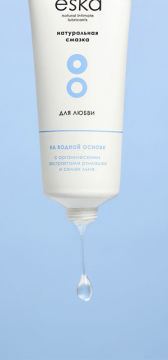 Eska - water-based lubricant, 75 ml
19,50 USD
Eska - water-based lubricant, 75 ml
19,50 USD
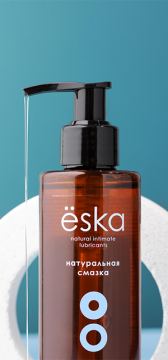 Eska - water-based lubricant, 200 ml
42,40 USD
Eska - water-based lubricant, 200 ml
42,40 USD
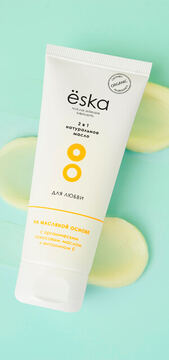 Eska - oil-based lubricant, 75 ml
23,10 USD
Eska - oil-based lubricant, 75 ml
23,10 USD
 Popular
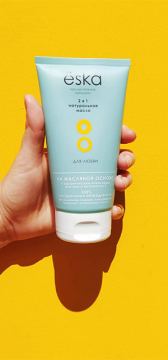
Eska - oil-based lubricant, 150 ml
38,90 USD
Popular
Eska - oil-based lubricant, 150 ml
38,90 USD
 New
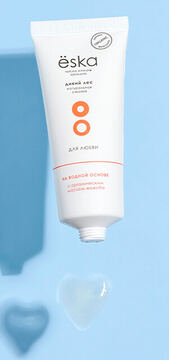
Eska - water-based lubricant Wild Forest, 75 ml
19,50 USD
New
Eska - water-based lubricant Wild Forest, 75 ml
19,50 USD
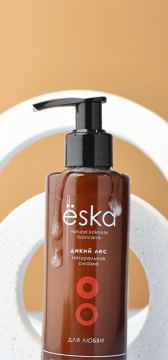 Eska - water-based lubricant Wild Forest, 200 ml
42,40 USD
Eska - water-based lubricant Wild Forest, 200 ml
42,40 USD
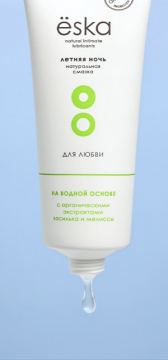 Eska - water-based lubricant Summer Night, 75 ml
19,50 USD
Eska - water-based lubricant Summer Night, 75 ml
19,50 USD
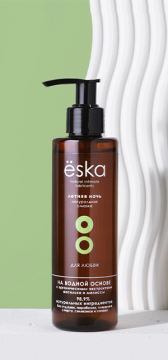 Eska - water-based lubricant Summer Night, 200 ml
42,40 USD
Eska - water-based lubricant Summer Night, 200 ml
42,40 USD
 New
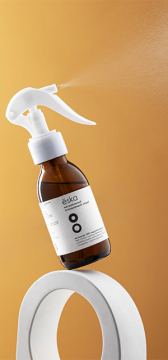
Eska - spray for cleaning and disinfecting sex toys
15,90 USD
New
Eska - spray for cleaning and disinfecting sex toys
15,90 USD


 +375 29 614 82 94
  eskalube
 info@eskalube.by