

People have been using lubricants for hundreds of years, but in the modern form we know them, they appeared relatively recently. If you’ve ever wondered what ancient people used as a lubricant, there are several interesting answers to this question.
The oldest and most obvious lubricant is vegetable oil. In Ancient Greece, olive oil was used for many purposes, including as a sexual lubricant. The first written mention of olive oil being used as a lubricant dates back to 350 BC. Greek philosopher Aristotle referred to the contraceptive properties of olive oil mixed with cedar oil, lead, and incense. From Greek texts, we know that women who used leather-made phalluses applied olive oil to them for better sliding.
The Romans also used olive oil for sex and masturbation and, just like the Greeks, attempted to include contraceptive properties in their oil formula. Pliny, the great Roman thinker, suggested mixing olive oil, pigeon dung, and wine. Olive oil remained popular as a lubricant until the 16th century, around the same time the word "phallic" entered the vocabulary.
The use of lubricants was not limited to the West. During the Edo period in Japan (1603–1868), couples used a substance called Tororo-Jiru (slippery oil made from yam puree) for lubrication during sex. The Japanese used Tororo-Jiru as a way to facilitate sliding during the use of animal intestine condoms.
Today, Tororo-Jiru is most commonly known as a popular Japanese soup.
The Chinese also had animal intestine condoms at that time, which they lubricated with vegetable oil.
In the article "Medicinal Use of Seaweed," it is mentioned that in China, Korea, and Japan, people boiled red seaweed to produce a thick, sticky liquid called carrageenan. This liquid was used as a sexual lubricant. Today, this substance is used as an additive in food products and cosmetics, but in the past, it was used as a moisturizing agent during sex.
In 1899, English chemist Frederick Kipping discovered a special polymer, marking the birth of silicone-based lubricants and synthetic rubber. So, those who enjoy silicone-based lubricants should thank Kipping for his discovery.
As expected, people in socially conservative societies were less inclined to use lubricants. In the 19th century, some gynecologists prescribed pelvic massages for women who couldn’t produce enough natural lubrication. The doctor would massage the woman’s clitoris until she experienced an orgasm, and at that moment, she was considered cured.
Mass-produced lubricants didn’t exist until the early 20th century. The first commercially manufactured lubricant was KY Jelly, which was released in 1904 as a surgical lubricant.
In 1933, Robert Chesebro invented petroleum jelly (the brand name Vaseline), which has since been used as a lubricant, especially for circumcised men and during anal sex. However, petroleum jelly can damage latex and cause skin irritation.
The sexual revolution of the 1960s made lubricants socially more acceptable. Since the 1990s, hundreds of lubricants have been on the market to meet the needs of various types of users.
Today, the adult toy industry has provided us with some modern essentials such as condoms and vibrators. Of course, no good conversation about sex toys is complete without mentioning sexual lubricants. Today’s market offers an exciting variety of lubricants: water-based, oil-based, silicone-based, stimulating, moisturizing, warming, cooling, natural, organic, synthetic, edible, flavored, for anal, vaginal, and oral sex... These luxury items are unique to the modern era. Our ancestors didn’t have access to such a wide range of lubricants. We, on the other hand, have many ways to improve or diversify our sex lives, and that’s something to be happy about!
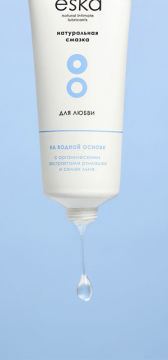 Eska - water-based lubricant, 75 ml
19,50 USD
Eska - water-based lubricant, 75 ml
19,50 USD
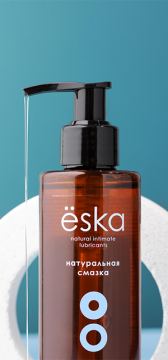 Eska - water-based lubricant, 200 ml
42,40 USD
Eska - water-based lubricant, 200 ml
42,40 USD
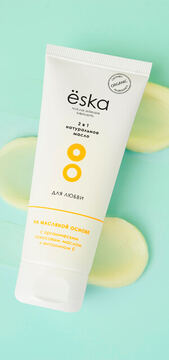 Eska - oil-based lubricant, 75 ml
23,10 USD
Eska - oil-based lubricant, 75 ml
23,10 USD
 Popular
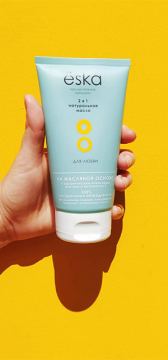
Eska - oil-based lubricant, 150 ml
38,90 USD
Popular
Eska - oil-based lubricant, 150 ml
38,90 USD
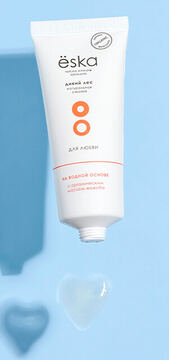 New
Eska - water-based lubricant Wild Forest, 75 ml
19,50 USD
New
Eska - water-based lubricant Wild Forest, 75 ml
19,50 USD
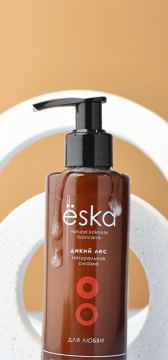 Eska - water-based lubricant Wild Forest, 200 ml
42,40 USD
Eska - water-based lubricant Wild Forest, 200 ml
42,40 USD
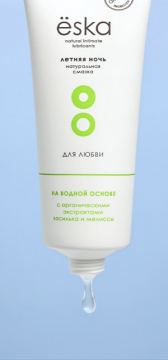 Eska - water-based lubricant Summer Night, 75 ml
19,50 USD
Eska - water-based lubricant Summer Night, 75 ml
19,50 USD
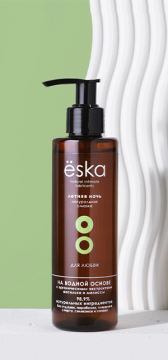 Eska - water-based lubricant Summer Night, 200 ml
42,40 USD
Eska - water-based lubricant Summer Night, 200 ml
42,40 USD
 New
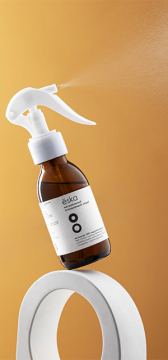
Eska - spray for cleaning and disinfecting sex toys
15,90 USD
New
Eska - spray for cleaning and disinfecting sex toys
15,90 USD


 +375 29 614 82 94
  eskalube
 info@eskalube.by